RSE CEO Stephen Slessor reflects on the IWA World Water Congress 2026 and what it revealed about the future of planning, delivery and people across the water sector.
For the first time, the UK hosted the IWA World Water Congress and Exhibition, and RSE was proud to be principal sponsor. Almost 9,000 water professionals came to Glasgow, and the exhibition hall was busy from the opening afternoon. With five days of business forums, TED-style talks and exhibitors to meet and speak to, here’s what I took away.

Planning is moving to the regional level
Regional water system planning featured in session after session and now looks like working practice rather than theory. This tells me something very encouraging – we are now planning at a scale that matters.
It gives countries a way to connect national water strategies, which many still lack, with the municipal and agricultural water management that happens locally. The boundaries need to follow the hydrology, but political and social catchments matter too. Sir Jon Cunliffe, who chaired the Independent Water Commission, said he expected the government to implement some, perhaps all, of his recommendations, but couldn’t say which. Interest in regional planning and the appetite from government, though, is clearly growing.
Resilience, leakage and data
Three themes dominated day one: resilience, non-revenue water, and better decisions from data and AI. The pressures on water systems are getting more complex – but the good news is that the toolkit to meet them is getting wider.
One moment that landed with the room: the Glasgow Framework — Bridging the Water Investment Gap: A Framework for Delivering UN Sustainable Development Goal 6 — won strong backing from delegates. It heads to the UN Water Conference in the UAE in December and gives the sector a clear message on where investment should go.
Standards only help if they survive the site
Standardisation came up in almost every conversation I had, and it is harder in practice than it sounds. Some local requirements exist for excellent reasons – such as a rule written after a failure many years ago. My view is that the sector should keep the requirements that change how an asset works and question the ones that only change how it looks.
Factory built delivery saves time, but people need to trust the process
This is where I’ll get specific, because it’s our world.
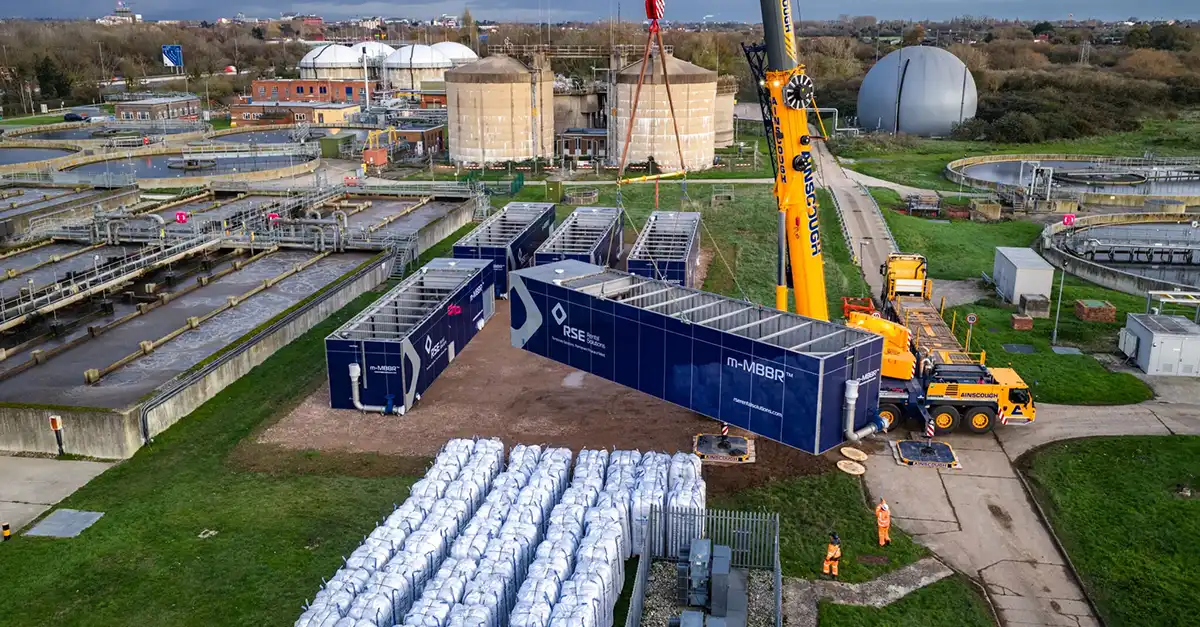
Our modular approach builds standard products in the factory instead of on site. Across our projects, we typically see delivery around 50% faster, costs around 30% lower, and carbon around 85% lower. Units are fully commissioned before they leave – valve testing, control logic, the lot – so once on site, it’s largely water and chemical connections.
In all honesty, the technology is rarely the hard part. Customers often accept a modular unit quickly, but a familiar process can still win the argument even when the new one meets the same spec. The fix isn’t a better brochure. It’s explaining the process early, showing the evidence and letting customers judge the outcome rather than the habit.
Operators need a seat at the table
If there was one theme that kept resurfacing, it was the gap between the teams who build assets and the teams who live with them. Operations and maintenance teams live and work around design decisions for decades, yet they can often be brought in late.
Access, visibility and maintenance routines should all be agreed with the people who’ll run the plant before the modular unit is even built. Capital delivery and operations shouldn’t be two conversations. They should be one.
Give young professionals real responsibility now
The Women in Water and Young Water Professionals programmes were at the centre of the congress. On one panel, a speaker pushed back on the idea that new engineers are blank slates we prepare for the sector. She pointed out that many arrive already shaped by the climate challenges they’ve grown up with — and asked why we weren’t using those skills now.
She’s right. It applies to us and we intend to hand our younger engineers and managers real delivery and community responsibility much sooner.
So, what now?
For RSE, Glasgow points clearly in one direction: plan at the scale of the system, agree standards that hold up on site, build in the factory where it saves time, and bring operators and younger colleagues in earlier.
That’s where we’re putting our focus.
The road to the next conference in Kuching starts now.